
How Leading Churches Are Improving Congregation Sound Capture in Their Livestreams

Key Takeaways
- Church livestreams are often the first experience people have with a ministry, making clear and immersive livestream audio essential for connection and engagement
- Traditional congregation microphone setups can leave worship response sounding distant or uneven, especially in larger sanctuaries and balcony sections
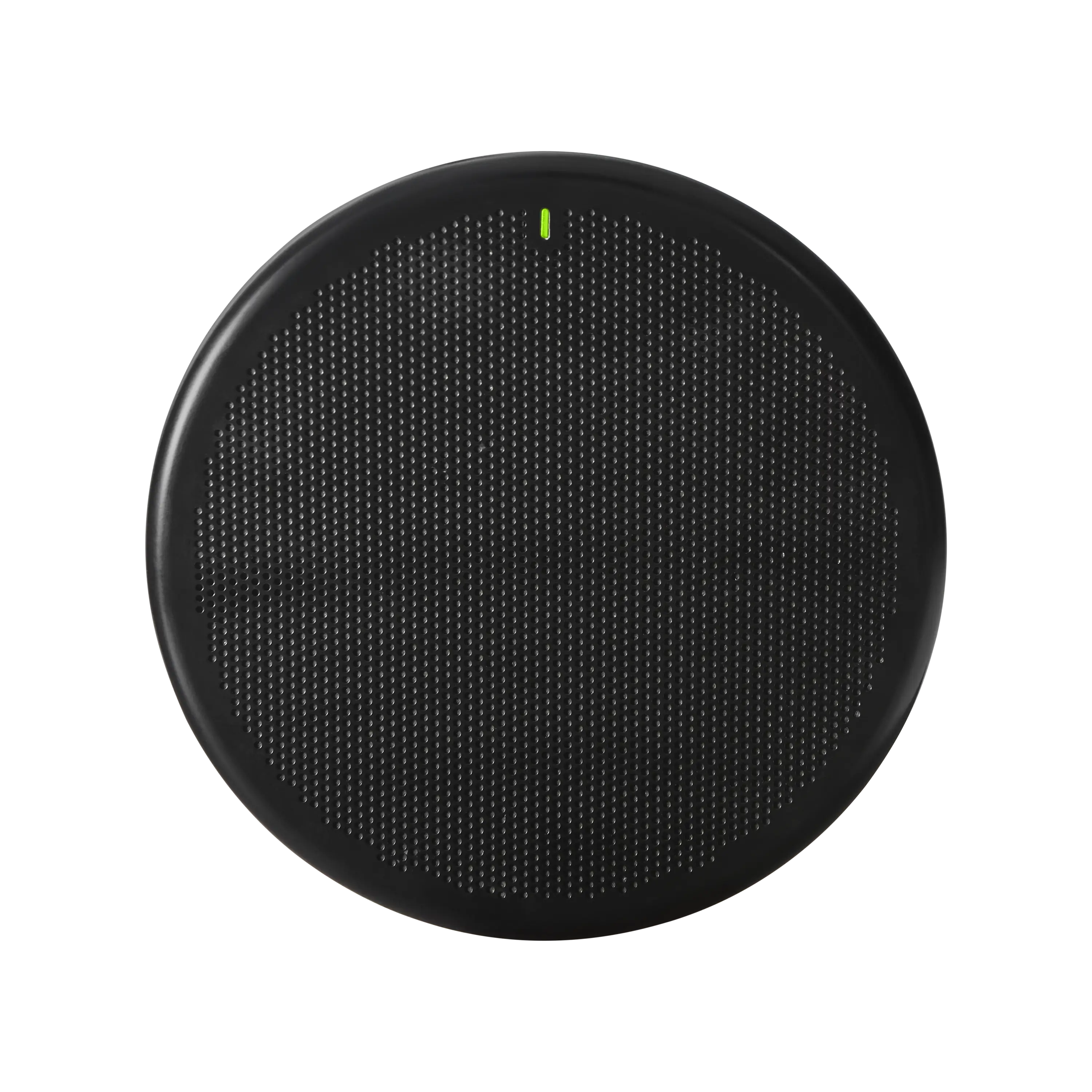
- The Shure DCA901 Digital Broadcast Microphone Array provides broader and more consistent congregation coverage than traditional shotgun microphone setups while reducing microphone and cabling complexity
- Improved congregation capture helps online viewers feel more connected to worship through clearer singing, room response, and participation
Church livestreaming has become one of the primary ways ministries reach people. For many churches, the livestream is no longer just a convenience for members who cannot attend. It is often the first experience someone has with the church.
Before attending in person, people often watch an online church service to understand the teaching, experience the worship, and determine whether they feel connected. That decision is shaped as much by what they hear as what they see.
During major services such as Easter, Christmas, and during special events, livestream quality plays an even greater role in shaping first impressions.
Most churches capture the pastor and worship team clearly. However, when the congregation sound is distant or underrepresented, the livestream loses the sense of participation and unity that defines worship in the room. Viewers can see engagement, but they cannot fully hear the congregational response that makes worship feel immersive and shared.
Accurately capturing congregation sound allows the livestream to communicate the full worship environment, helping online viewers feel present rather than separate from the moment.

Why does audio play the most important role in livestream engagement
Audio plays a central role in how people experience and connect with a livestream.
Research from University College London found that people experienced stronger emotional responses when listening compared to watching the same content on video. Listeners showed higher heart rates and other physiological indicators of emotional engagement, highlighting the importance of high quality livestream audio in creating emotional connection and engagement.
In worship environments, congregation singing, spoken responses, and moments of agreement communicate participation, unity, and atmosphere. These sounds help online viewers feel connected to the live church service as part of the congregation rather than as passive observers.
When the congregation’s sound is distant or missing, the livestream loses much of its emotional impact. Clear and consistent congregation sound capture allows worship to translate naturally to online audiences, creating a more immersive and authentic worship experience for viewers joining remotely.
Why is capturing the sound of the audience so difficult for church livestreams
Traditional microphones are designed to capture sound from a specific direction or point, which makes them ideal for individual speakers or instruments. However, the congregation’s sound is distributed throughout the entire sanctuary, including the front seating areas, mid-room sections, and balconies. This makes consistent congregation sound capture much more difficult in church livestream environments.
Shotgun microphones, commonly used for congregation pickup, capture sound within a narrow forward range. As a result, participation farther from the microphone contributes less to the livestream mix, making the congregation sound distant or uneven for online viewers.
Adding more microphones can improve coverage, but it also increases system complexity. Each microphone requires mounting, cabling, routing, and ongoing management. For churches supported by small production teams or volunteers, larger microphone deployments can quickly become difficult to maintain and scale.
These limitations make it challenging for traditional microphone setups to consistently capture the full worship environment for livestream audiences.
Shotgun, Parabolic, or Array Mic? What Broadcast Engineers Need to Know
| What You Need | Shotgun Mics | Parabolic Mics | DCA901 Broadcast Array Mic |
| Focused pickup of key sounds | Static directional lobe with moderate rejection | Ultra-narrow focus with tonal limitations | Digitally steerable lobes with precise real-time control |
| Capture multiple sources with fewer devices | One mic per source | One mic per source | One array with up to 8 steerable lobes and isolated outputs |
| Clean audio in noisy environments | Prone to off-axis spill in crowded settings | Strong rejection with tonal tradeoffs | Tunable rejection zones for clearer, more focused capture |
| Fast setup and routing | Requires analog cabling and external DSP | Manual setup and analog output | Single network cable with Dante or AES67 routing |
| Visual footprint on camera or set | Partially visible on booms or stands | Large and visually obtrusive | Low-profile, camera-ready design |
| Coverage flexibility for moving sources | Requires physical repositioning | Fixed pickup zone only | Real-time lobe steering without repositioning |
| Support immersive formats | Mono only | Mono only | Built-in stereo and 5.1 capture |
| Integrated signal processing | Requires external mixing, EQ, and delay | No onboard processing | Built-in DSP with EQ, compression, delay, and automixer |
A new approach: software-defined congregation capture with digital array microphones
Digital array microphone technology gives churches a more scalable and consistent way to capture congregation sound for livestreams.
The Shure DCA901 digital broadcast microphone array uses 78 individual microphone elements to create up to eight software-defined steerable lobes. Instead of relying solely on physical mic placement, audio teams can shape and adjust coverage zones based on the sanctuary’s actual dimensions and layout.
This approach helps online viewers hear a more complete and natural representation of the worship environment, with congregation participation integrated naturally into the livestream mix.
Learn how the Shure DCA901 captures congregation sound

What changes when the full congregation becomes part of the livestream mix
When congregation sound capture improves, the livestream experience becomes noticeably more immersive and connected for online viewers.
Participation from across the sanctuary naturally contributes to the livestream mix. Congregational singing feels more unified; applause reflects the energy of the full room, and moments of response carry their intended impact in the worship environment.
In large sanctuary deployments, the DCA901 has enabled churches to clearly capture congregation sound from seating areas 50 to 60 feet into the room, including balcony sections. Even when installed at distances similar to traditional shotgun microphones, congregation participation sounds closer, fuller, and more connected in the livestream.
Production teams also benefit from greater consistency. Instead of balancing multiple congregation microphones, coverage can be managed through defined zones, improving reliability from service to service.
Improving coverage while reducing microphones, cabling, and cost
Achieving similar broad congregation sound coverage with traditional microphones often requires significantly more devices, increasing both equipment and infrastructure costs for church livestream systems.
Digital array microphone technology provides a cost-effective solution by capturing multiple congregation zones from a single unit. Each DCA901 can cover areas that would traditionally require numerous shotgun microphones, helping reduce cabling, mounting hardware, routing complexity, and overall system cost.
Fewer devices mean fewer potential failure points and less infrastructure to maintain. Churches can deploy multiple arrays across larger sanctuaries to extend coverage while maintaining centralized control, providing a flexible solution that scales with growing livestream production needs.
The DCA901’s low-profile design also integrates discreetly into the sanctuary, preserving the visual focus on worship rather than the equipment.
How clear congregation sound improves church livestream engagement
Church livestreaming has become a permanent extension of ministry. Online viewers include members who cannot attend in person as well as people evaluating the church for the first time.
During major services such as Easter, Christmas, and special events, livestream audio quality plays a critical role in shaping how viewers experience worship and connection online.
When congregation sound capture is clear and consistent, the livestream communicates participation, unity, and presence more naturally. Congregational worship, spoken responses, and room engagement help online audiences feel connected to the live service rather than separated from it.
Digital array microphone technology provides churches with a scalable and cost-effective way to improve congregation capture while simplifying livestream audio infrastructure and long-term system management.
Request more information about the DCA901 for your church
FAQ: Congregation Sound Capture for Church Livestreams
Why is congregation sound often difficult to capture clearly in church livestreams? Congregation sound comes from across the entire sanctuary, including seating sections and balconies, making it difficult for traditional directional microphones to capture worship participation evenly.
How does the DCA901 improve congregation coverage compared to traditional shotgun microphones? The DCA901 uses software-defined steerable lobes to capture broader congregation areas from a single array, helping churches reduce microphone count while improving coverage consistency.
Can digital array microphones help simplify church livestream infrastructure? Yes. By covering multiple congregation zones from fewer devices, digital array microphones can reduce cabling, microphone management, and overall system complexity.
How does better congregation capture affect the livestream experience? Clear congregation sound helps online viewers hear worship participation, singing, and room response more naturally, creating a more immersive and connected worship experience.
Are digital array microphone systems scalable for larger sanctuaries? Yes. Churches can deploy multiple arrays across larger worship spaces while maintaining centralized control of congregation coverage zones and livestream audio management.

相关产品和配件

SLX-D+ vs. SLX-D: Trusted by Professionals, Designed for Everyone
SLX-D+ takes everything you love about SLX-D wireless microphone systems and makes it even better. With an expanded wide-tuning range, ShowLink® Ease for remote control, encryption, and digital feedback reduction, SLX-D+ delivers reliable, professional wireless audio with even greater control and flexibility.
AI in Broadcast Audio: How Shure and the DCA901 Are Changing Live Production
Discover Shure’s breakthrough with Agentic AI at IBC 2025, where the DCA901 Broadcast Microphone Array and intelligent audio agents are helping broadcast engineers focus more on creative storytelling and less on managing equipment.
The Next Revolution in Sports Broadcasts Starts with Intelligent Audio
Intelligent audio is transforming sports broadcasting — bringing fans closer to the action than ever before. Discover how the Shure DCA901 Broadcast Microphone Array and Edge Sound Research’s Virtual Sound Engine deliver immersive, front-row sound experiences and streamline production workflows.
ANX4 Scalable Wireless Receiver: More of What You Want and Less of What You Don't
Shure’s ANX4 is a scalable, high-tier wireless receiver designed for large channel-count environments. Up to 16 Axient Digital or 24 ULX-D channels can be managed via ShureCloud for flexible allocation across devices. ANX4 maximizes rack space, offers wide tuning (174 MHz–2 GHz), integrated Dante/AES67 outputs, and streamlined antenna setups, delivering cost efficiency and adaptability for complex productions.
How Steerable Lobes Redefine Broadcast Audio Capture
Shure’s DCA901 Broadcast Microphone Array uses digitally steerable lobes to capture precise, high-quality audio for live broadcasts. It combines 78 internal microphones into eight adjustable pickup zones with integrated DSP, reducing setup complexity and hardware footprint. Benefits include superior isolation, minimal ambient noise, and streamlined control via a web interface—ideal for sports and live events.


